I believe and am certain that Ukraine will exist as a state. Perhaps not immediately as large as we would like it to be, but it will exist. I think that the path toward Ukrainian Statehood lies through Kyiv rather than through Lviv. Only when Ukrainian Statehood becomes firmly established on the hills of the Dnipro and by the Black Sea, only then will it be possible to regard as a real prospect the gathering of Ukrainian lands seized by neighbouring states.
Symon Petliura
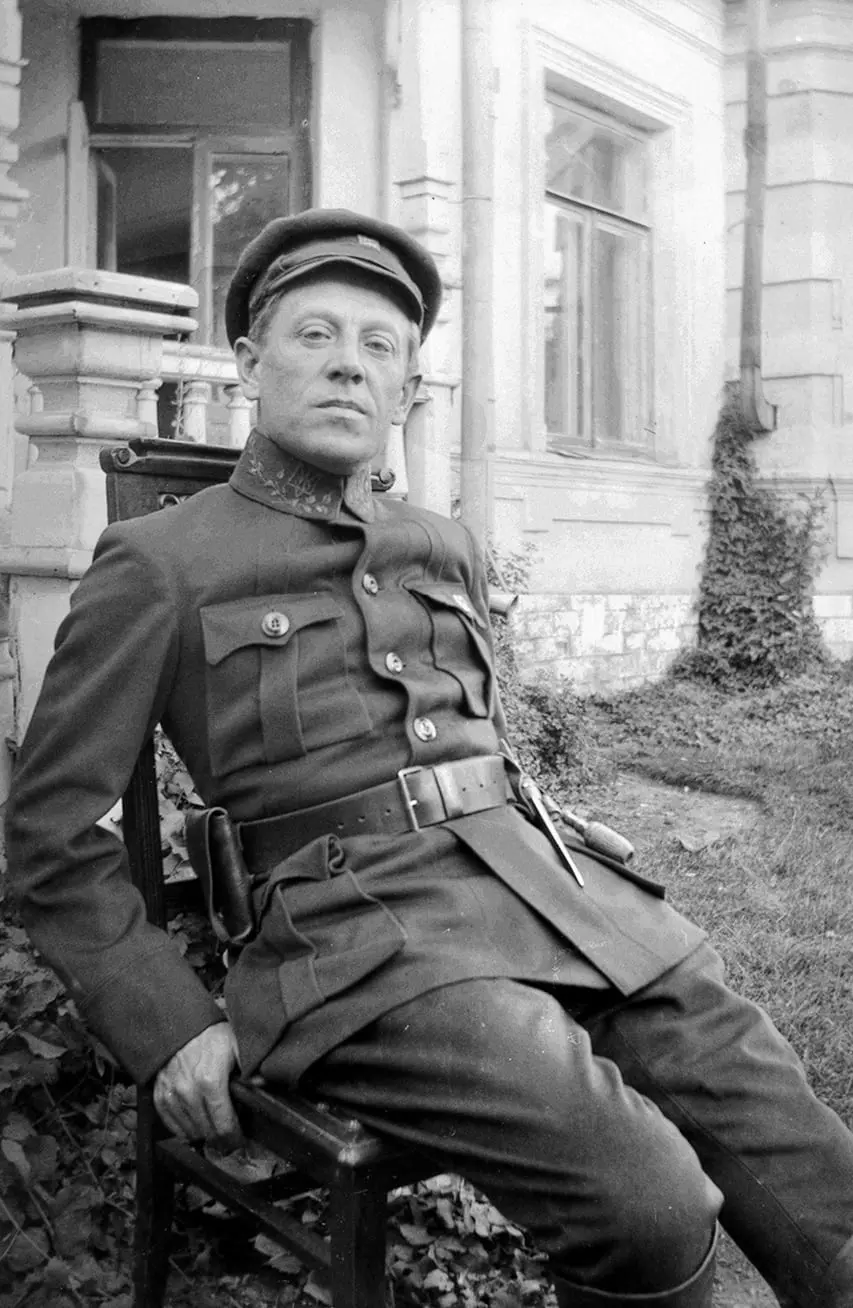
Symon Petliura was a Ukrainian statesman, military and political leader, journalist and publicist writer, Supreme Otaman of the Army of the Ukrainian People’s Republic (UPR), and a prominent fighter for Ukraine’s independence.
He was born in 1879 in Poltava into a burgher family with Cossack roots. He studied at the Poltava Theological Seminary, from which he was expelled in 1901 for participating in a secret Ukrainian circle and for organizing a performance by the composer Mykola Lysenko. In the same year, he joined the Revolutionary Ukrainian Party (RUP). Escaping arrest, he departed for the Kuban region at the end of 1902, where he engaged in teaching and worked on organizing the archives of the Kuban Cossacks.
Later, he lived in Kyiv, Lviv, and Saint Petersburg. Between 1912 and 1917, while in Moscow, he served as co-editor of the influential journal «Ukrainskaya Zhizn» («Ukrainian Life»), the only legal Ukrainian socio-political periodical published in the Russian Empire at that time.
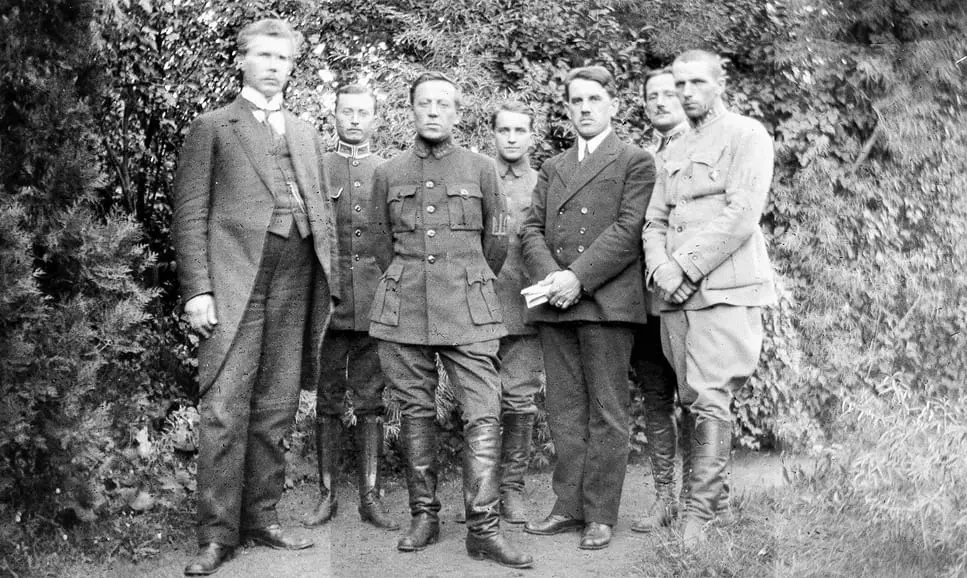
During the First World War, from 1916 onward, he served in the All-Russian Union of Zemstvos. With the beginning of the Ukrainian revolutionary events, in May 1917, at the First All-Ukrainian Military Congress, he was elected Chairman of the Ukrainian General Military Committee, and in June became the first General Secretary for Military Affairs of the Central Rada. At the end of 1917, he resigned from office and personally formed the Haidamaka Kosh of Sloboda Ukraine, which played a decisive role in suppressing the Bolshevik uprising at the Arsenal Factory and in the defence of Kyiv in January 1918. Under Hetman Pavlo Skoropadskyi, he headed the All-Ukrainian Union of Zemstvos and was arrested because of his opposition activities. At the end of 1918, he became one of the leaders of the anti-Hetman uprising and became a member of the Directorate of the Ukrainian People’s Republic, assuming command of the UPR Army.
In January 1919, he initiated the creation of the Ukrainian Republican Capella under the direction of the distinguished composer and conductor Oleksandr Koshyts, which became one of the most successful examples of Ukrainian cultural diplomacy in the world.
Following the defeat of the Ukrainian national liberation struggle, he left Ukraine and went abroad. From November 1922, he headed the government-in-exile of the Ukrainian People’s Republic in Poland. On 31 December 1923, he departed for Austria and subsequently travelled to Hungary and Switzerland. In October 1924, he settled in Paris, where he organized the publication of the weekly newspaper «Tryzub» («The Trident») and continued to perform the duties of Chairman of the Directorate of the Ukrainian People’s Republic and Supreme Otaman of the UPR.
In 1925, he wrote the book «Moskovska Vosha, or Uncle Semen’s Tale of How Moscow Lice Devour Ukraine and What Should Be Done About Them» («The Moscow Louse…» ).
On 25 May 1926, he was assassinated by the anarchist Sholom Schwartzbard. Schwartzbard fired seven shots at the politician while he had stopped near a bookshop and was examining the books displayed in the shop window. Evidence that Petliura’s assassination was in fact an operation carried out by Soviet intelligence services was later provided by KGB officer Petro Deryabin, who defected to the United States in 1954 and spoke about it at the U.S. Congress.